
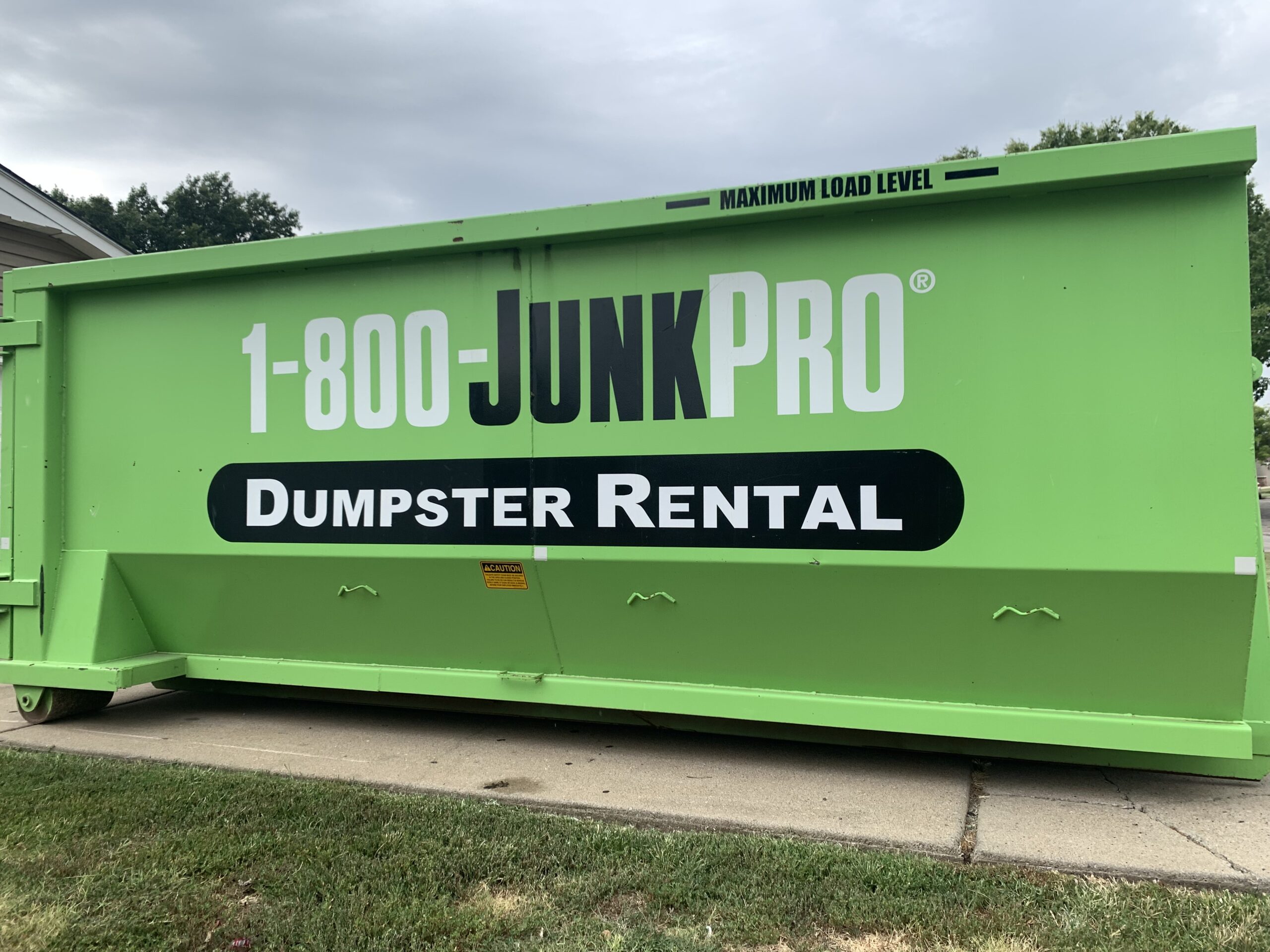
When planning a dumpster rental, one of the first questions homeowners usually ask is about size.
How much will fit? What size dumpster does the project need? Will there be enough room for everything?
Those questions matter, but there’s another question that’s just as important:
What are you actually putting in the dumpster?
A garage cleanout, bathroom remodel, flooring project, roofing job, and other home projects can produce very different types of debris. Some materials take up a lot of space. Others can add significant weight without filling much of the container.
At 1-800-JUNKPRO®, we’ve learned that understanding the project is key to planning a residential dumpster rental. The amount of debris matters, but so does what’s in it.
A Full Dumpster Doesn’t Always Mean the Same Thing
It’s natural to think about dumpster capacity in terms of available space.
Furniture, boxes, cabinets, drywall, flooring, lumber, shingles, and other project debris all take up room. But those materials don’t create the same type of load.
Some household items are bulky but relatively light. Dense materials can add substantial weight even when they occupy less space.
That means a dumpster can reach an allowable weight before it looks completely full.
It’s one reason choosing a dumpster shouldn’t be based on volume alone.
Start With the Project, Not Just the Dumpster Size
Before deciding what dumpster you need, think about the work you’re actually doing.
A home cleanout might produce furniture, boxes, household belongings, and miscellaneous items.
A kitchen remodel could include cabinets, countertops, flooring, drywall, fixtures, lumber, and packaging from new materials.
A roofing project creates a much different debris stream. Other renovation or outdoor projects can involve heavier materials that require additional planning.
When you contact your local 1-800-JUNKPRO®, tell us about the project instead of simply saying you need a dumpster.
That information gives us a clearer picture of what you expect to load and helps us identify questions to answer before delivery.
Heavy Materials Require More Planning
Weight can be surprisingly difficult to estimate by looking at a pile of debris.
Dense materials may not appear to take up much room, but their weight can add up quickly once they’re concentrated inside a dumpster.
That’s why it’s important to tell us if your project will produce particularly heavy debris.
Depending on the material and location, different requirements or restrictions may apply. The appropriate container and loading instructions can also depend on what you’re disposing of.
Don’t wait until the dumpster is loaded to ask.
Discussing heavy debris before delivery gives your local 1-800-JUNKPRO® team an opportunity to review the project and explain the applicable requirements.
Renovation Debris Isn’t Always What You Expect
Renovations often produce materials homeowners didn’t initially expect.
Imagine you’re replacing a kitchen.
The cabinets are obvious. But once work begins, you might also remove countertops, flooring, drywall, trim, fixtures, damaged material uncovered during demolition, and other components.
Then new materials begin arriving.
Those materials bring boxes, wrapping, packing materials, scraps, cutoffs, and other waste.
Suddenly, the debris from the project looks very different from the original estimate.
This is why we recommend thinking about the entire project, not just the first thing you’re tearing out.
Walk through the work from beginning to end.
What will be removed? What could be uncovered? What will be replaced? What other debris will the work create?
You don’t need a perfect estimate. You’re simply trying to get a more realistic picture before the project begins.
From the Field: Dumpster Rental
When customers contact our 1-800-JUNKPRO® Jackson team about a dumpster rental, knowing what they’re working on can be just as helpful as knowing how much debris they expect to have.
A home cleanout, flooring project, bathroom remodel, roofing job, or other home improvement project can produce very different materials. Some debris takes up a lot of room without being especially dense. Other materials can add significant weight long before a dumpster looks full.
That’s why describing the project helps our Jackson team understand the rental from the start.
It also creates an opportunity to discuss materials that may have restrictions or require different handling before we load anything. Accepted materials and disposal requirements can vary, so asking ahead of time is always better than discovering an issue at pickup.
For homeowners in the Jackson, Mississippi area, the takeaway is simple:
Don’t just tell us how much you think you’ll throw away. Tell us what you’re working on.
The project often tells us more about the debris than the pile you can see today.
Mixed Debris Can Make Estimating More Difficult
Many home projects don’t produce just one type of debris.
A garage cleanout is a good example. What looks like a straightforward cleanup can include old shelving, boxes, household items, broken furniture, outdoor equipment, scrap materials, and items stored for years.
Renovations can create an even wider mix.
Instead of estimating every individual item, group the debris into general categories. Tell your dumpster provider about the primary materials and point out anything unusually heavy or potentially restricted.
That conversation can be more useful than guessing exactly how many cubic yards the project will create.
Some Materials May Need Different Handling
Not everything you want to remove from your property automatically belongs in a residential dumpster.
Paints and other liquids, chemicals, batteries, tires, certain appliances, and other materials may be restricted or require special handling. Requirements vary by material, disposal facility, and local regulations.
If you’re unsure about an item, ask before loading it.
Your local 1-800-JUNKPRO® can explain what’s accepted for your dumpster rental and whether certain materials require a different solution.
It’s much easier to answer that question before an item goes into the dumpster than after it’s buried underneath everything else.
Plan for the Debris Before the Dumpster Arrives
You don’t need to become a waste expert before renting a dumpster.
You just need to think beyond the pile size.
Before scheduling your residential dumpster rental, make a quick list of the primary materials your project is likely to produce. Identify anything especially heavy. Consider what else might come out as the project progresses, and ask about anything you’re unsure whether you can load.
Most importantly, tell us what you’re doing.
At 1-800-JUNKPRO®, one of the most useful questions we can ask isn’t simply:
“How much debris do you have?”
It’s:
“What are you working on?”
Because when planning a dumpster rental, what goes into the container can matter as much as how much.