
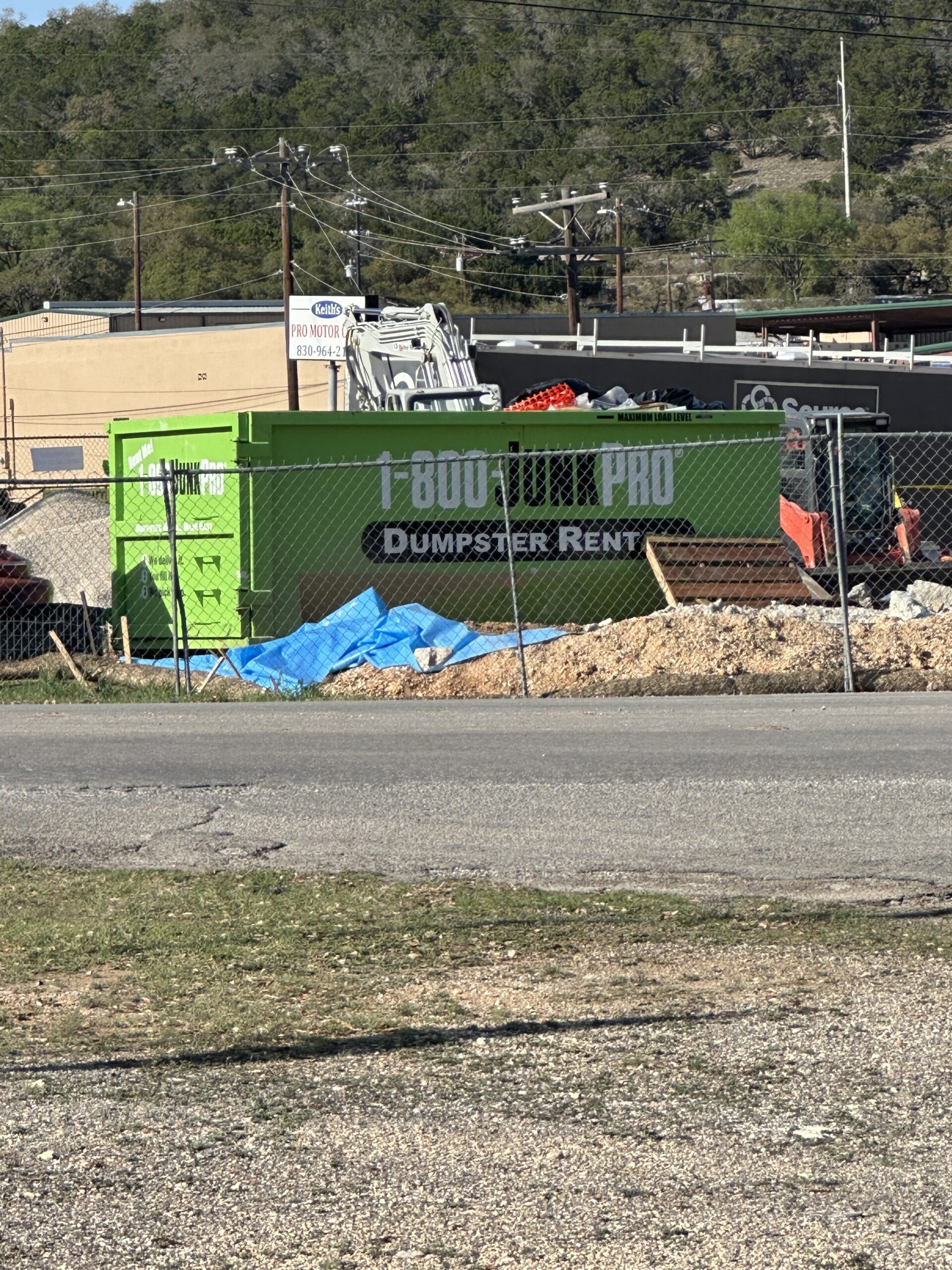
On a commercial jobsite, a dumpster does more than hold debris. It keeps the project moving.
Crews keep working. Materials come out. New materials arrive. Different trades move through the site, and debris keeps accumulating as the project progresses.
Eventually, the dumpster fills.
For contractors and project managers, the important question isn’t only when the dumpster will be full. It’s also what happens on the jobsite when it is.
Planning for dumpster turnaround can help prevent a full container from becoming an obstacle to the work happening around it.
A Full Dumpster Can Affect More Than Cleanup
Commercial projects rarely generate debris at exactly the same rate from beginning to end.
Demolition may produce a large volume quickly. Another phase may create debris gradually. Later, a different trade can increase the volume again.
That changing pace matters.
When a dumpster reaches capacity, crews need somewhere to put the next load of debris. Without a plan, materials can begin accumulating elsewhere on the site and interfere with work areas, access points, or normal jobsite activity.
Good dumpster management looks beyond the container itself.
It considers what’s happening around it.
Plan Around Project Phases, Not Just the Calendar
A construction schedule can help predict when dumpster service may need to increase.
Demolition, roofing, remodeling, tenant improvements, and other phases don’t necessarily generate the same amount or type of debris. Knowing what comes next helps contractors anticipate periods when containers may fill faster.
For example, a dumpster that handles the project’s normal debris volume may turn over much faster once a major removal phase begins.
Instead of waiting until the container reaches capacity to think about the next move, contractors can communicate upcoming changes to their dumpster provider.
That gives both sides more information.
Don’t Wait Until There’s Nowhere Left to Put Debris
A completely full dumpster is an obvious signal that it needs attention.
The better signal may come earlier.
Project managers, superintendents, or other team members who regularly see the container can monitor how quickly it fills. If the dumpster reaches half capacity much faster than usual, that can indicate a change in the project’s debris flow.
That communication gives the dumpster provider time to understand what’s happening and coordinate service based on availability.
It also helps answer an important operational question:
Is this a one-time increase in debris, or is the project entering a phase that will require more frequent service?
Those are two different situations and may call for different planning.
From the Field: Commercial Dumpster Service
Commercial job sites in San Antonio can change quickly as a project moves from one phase to the next. Demolition, roofing, remodeling, and other work can also change how quickly a dumpster fills.
Our 1-800-JUNKPRO® San Antonio team understands that dumpster service needs to keep pace with what’s happening on the jobsite.
A container may have plenty of remaining capacity one day and fill much faster once a debris-heavy phase begins. Contractors and project managers who look ahead can give us a better understanding of upcoming service needs before the container reaches capacity.
Jobsite access can change too. Building materials, equipment, temporary fencing, deliveries, and subcontractor vehicles may affect the path to the dumpster. Keeping that service area accessible helps the scheduled pickup or exchange go more smoothly.
Communication matters on both sides. When we know what’s changing on the project, we can coordinate service based on the jobsite’s needs and available scheduling.
On a busy San Antonio commercial jobsite, dumpster service works best when the container schedule follows the pace of the project, not simply the dates on the calendar.
Keep the Dumpster Service Area Accessible
Even a well-planned exchange or pickup can become difficult if the driver can’t reach the container.
Commercial job sites change constantly.
A service path that was open when the dumpster arrived may later be blocked by building materials, equipment, temporary fencing, parked vehicles, or other obstacles. Site conditions can also change as construction progresses.
Before scheduled service, check the path to the container and the area immediately around it.
Clear communication becomes especially important when site access changes. If the original route no longer works, letting the dumpster provider know ahead of time can help identify what needs to happen before the truck arrives.
A quick access check can prevent a simple site change from disrupting the service schedule.
One Dumpster Isn’t Always the Entire Plan
Larger commercial projects may have more than one debris stream, work area, or phase happening at the same time.
In those situations, dumpster planning may involve more than repeatedly servicing one container.
The project may need additional containers as activity increases. Separate areas of the site may require their own debris plan. A change in construction phase can also change container needs.
The right setup depends on the project, available space, debris type, site access, and local service options.
That’s why commercial dumpster planning should remain flexible as the project develops.
Communication Helps the Dumpster Provider Plan Ahead
Contractors manage moving targets every day.
Dumpster providers do too.
Drivers have routes. Containers move between projects. Deliveries, exchanges, and pickups all require coordination. Changes at one jobsite can affect the equipment and scheduling needed elsewhere.
Early communication gives the provider better information for planning those moving pieces.
If a major demolition phase starts next week, mention it. If debris volume suddenly increases, call before the container becomes overloaded. When site access changes, communicate that before the scheduled truck arrives.
No provider can prevent every scheduling challenge or unexpected change.
Good communication gives everyone a better chance to respond.
Dumpster Service Should Follow the Work
Commercial dumpster rental isn’t only about placing a container on a jobsite and returning when the project ends.
Active projects change.
Debris volume rises and falls. Trades move through the site. Access points shift. Containers fill at different rates as the work progresses.
Contractors who watch those changes can plan dumpster service around what the project actually needs.
That means monitoring container capacity, anticipating debris-heavy phases, maintaining truck access, and communicating changes before they become problems.
At 1-800-JUNKPRO®, our goal is straightforward: provide dependable commercial dumpster service that matches the pace of the jobsite and keeps debris moving.