Most dumpster rentals accept general household junk, construction debris, and yard waste. However, hazardous materials, certain electronics, and items requiring special handling are typically not allowed.
In simple terms, everyday debris is usually acceptable, but anything dangerous or regulated must be handled separately.
Who This Applies To
This information is especially helpful for:
- Homeowners planning cleanouts or renovation projects
- Contractors managing jobsite debris
- Property managers handling large-scale cleanups
Why This Matters
Knowing what can and cannot go in a dumpster helps prevent delays, additional charges, and unexpected issues during pickup.
In many cases:
- Restricted items are loaded without realizing it
- Dumpsters cannot be hauled due to disposal rules
- Extra time is required to remove prohibited materials
Because of this, understanding these guidelines ahead of time keeps your project running smoothly.
Step-by-Step: How to Load a Dumpster the Right Way
- Identify Materials Before You Start: Take a quick look at everything you plan to throw away. This helps avoid loading items that are not allowed.
- Separate Restricted Items Early: Set aside anything that may require special disposal, such as chemicals, batteries, or electronics.
- Load Large Items First: Placing bulky items at the bottom helps maximize space and makes loading more efficient.
- Fill Gaps With Smaller Debris: Loose items like trash and packaging can be used to fill empty space.
- Keep Materials Below the Top Edge: Overfilling a dumpster can delay pickup and create safety concerns.
The Key Factors to Consider
The main factors include:
- Material type – Some items require special handling
- Weight – Heavy debris can impact hauling limits
- Local regulations – Restrictions vary by area
In many cases, these factors determine whether a load can be hauled without issue.
What Can Go in a Dumpster Rental
Most non-hazardous materials are accepted, including:
- Household junk such as furniture, clothing, and general clutter
- Construction debris like wood, drywall, flooring, and insulation
- Roofing materials such as shingles (weight limits may apply)
- Yard waste including branches, leaves, and organic material
- Non-hazardous appliances without refrigerants
- Paper, cardboard, and packaging materials
- Metal items such as furniture, fixtures, and scrap
These materials are commonly handled and processed without issue.
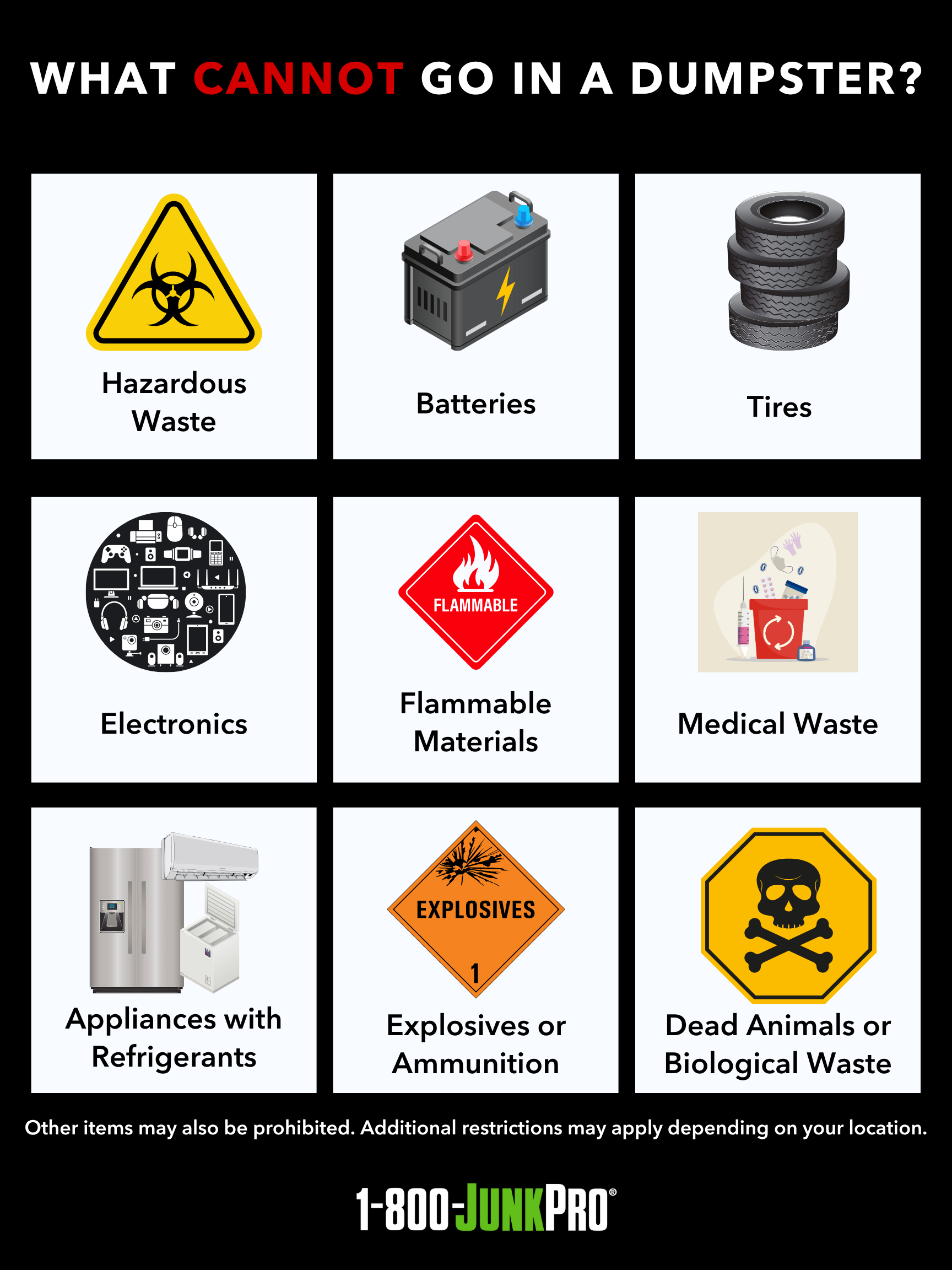
What Cannot Go in a Dumpster Rental
Certain items are restricted due to safety and environmental regulations:
- Hazardous chemicals, paints, and pesticides
- Batteries and certain electronic waste
- Tires (often require separate handling)
- Appliances containing refrigerants
- Flammable materials such as gasoline or propane tanks
- Medical or biological waste
- Explosives or ammunition
These items require specialized disposal and should never be placed in a standard dumpster.
Common Mistakes to Avoid
- Throwing in items without checking restrictions
- Mixing hazardous materials with general debris
- Overfilling the dumpster beyond capacity
A common situation is adding restricted items at the end of a project, which can delay pickup.
Real-World Scenario
For example:
A homeowner completes a renovation and loads a dumpster with debris. At the end, leftover paint and chemicals are added without realizing they are restricted.
At pickup, the dumpster cannot be hauled until those items are removed, delaying the project.
When It Makes Sense to Plan Ahead
It often makes sense when:
- You are handling a large cleanup or renovation
- Multiple types of materials are involved
- You want to avoid delays or additional fees
👉 At this point, many customers take a few extra minutes to confirm acceptable items before loading.
What to Expect From a Professional Service
- Review your project and materials
- Provide guidance on what can be loaded
- Deliver and place the dumpster
- Ensure proper hauling and disposal
- Help prevent delays or compliance issues
This structured approach helps ensure everything is handled correctly.
Cost vs Value
Loading restricted items can lead to:
- Additional fees
- Delayed pickups
- Extra labor to correct the issue
When these are considered, understanding guidelines upfront provides better overall value.
In Simple Terms
Most projects fall into two categories:
- General debris → Safe for dumpsters
- Hazardous or regulated materials → Require special disposal
Knowing the difference helps avoid problems.
Conclusion
Understanding what can and cannot go in a dumpster rental helps prevent delays, additional costs, and project disruptions. By planning ahead and following guidelines, you can keep your cleanup efficient and stress-free.
1-800-JUNKPRO® provides dumpster rental services designed to help customers manage debris properly, with guidance to ensure everything is handled safely and efficiently.
Frequently Asked Questions
1. Can I put appliances in a dumpster?
Some appliances are allowed, but those containing refrigerants require special handling.
2. What happens if I load a restricted item?
The item may need to be removed before pickup, which can delay the process.
3. Can I mix different types of debris?
Yes, most general debris can be mixed as long as restricted materials are not included.