When homeowners plan a renovation, most of the attention goes to what is being added: new flooring, cabinets, countertops, fixtures, drywall or finishes.
But almost every renovation starts by taking something out.
Old materials have to go somewhere, and the amount of renovation debris created during a project can be surprisingly easy to underestimate.
Planning for debris before work begins gives you a designated place for materials as they’re removed and can help keep the work area from becoming overwhelmed by piles of construction waste.
Renovation Debris Is More Than What You Tear Out
It’s easy to look at a remodeling project and estimate debris based only on the material being replaced.
Replacing flooring? You know the old flooring has to go.
Removing cabinets? You can see how many cabinets are coming out.
But the visible material isn’t always the entire waste stream.
Depending on the project, cleanup can also include trim, underlayment, drywall, lumber scraps, broken materials, old fixtures, packaging and other project debris.
There may also be materials you don’t discover until work begins.
Once a wall, floor, cabinet or fixture comes out, the project can reveal additional material that needs to be removed before the next phase can begin.
That’s why planning only for the obvious debris can leave homeowners scrambling for space midway through a renovation.
Think About the Entire Project, Not Just Demolition Day
Demolition may create the largest pile all at once, but debris can continue accumulating throughout the project.
New materials arrive in boxes and packaging. Pieces get cut to fit. Damaged materials may need to be discarded. Plans sometimes change after work has already started.
Instead of asking only:
“How much debris will demolition create?”
consider:
“What will we need to get rid of from the beginning of this project through the final cleanup?”
That gives you a much more realistic picture of your cleanup needs.
Give Debris a Place to Go From the Beginning
One of the simplest ways to keep renovation cleanup under control is to decide where debris will go before you start tearing things out.
Without a designated place, materials tend to migrate.
A pile starts in the garage. Another appears beside the house. Scraps collect near the work area. Before long, cleanup becomes its own project.
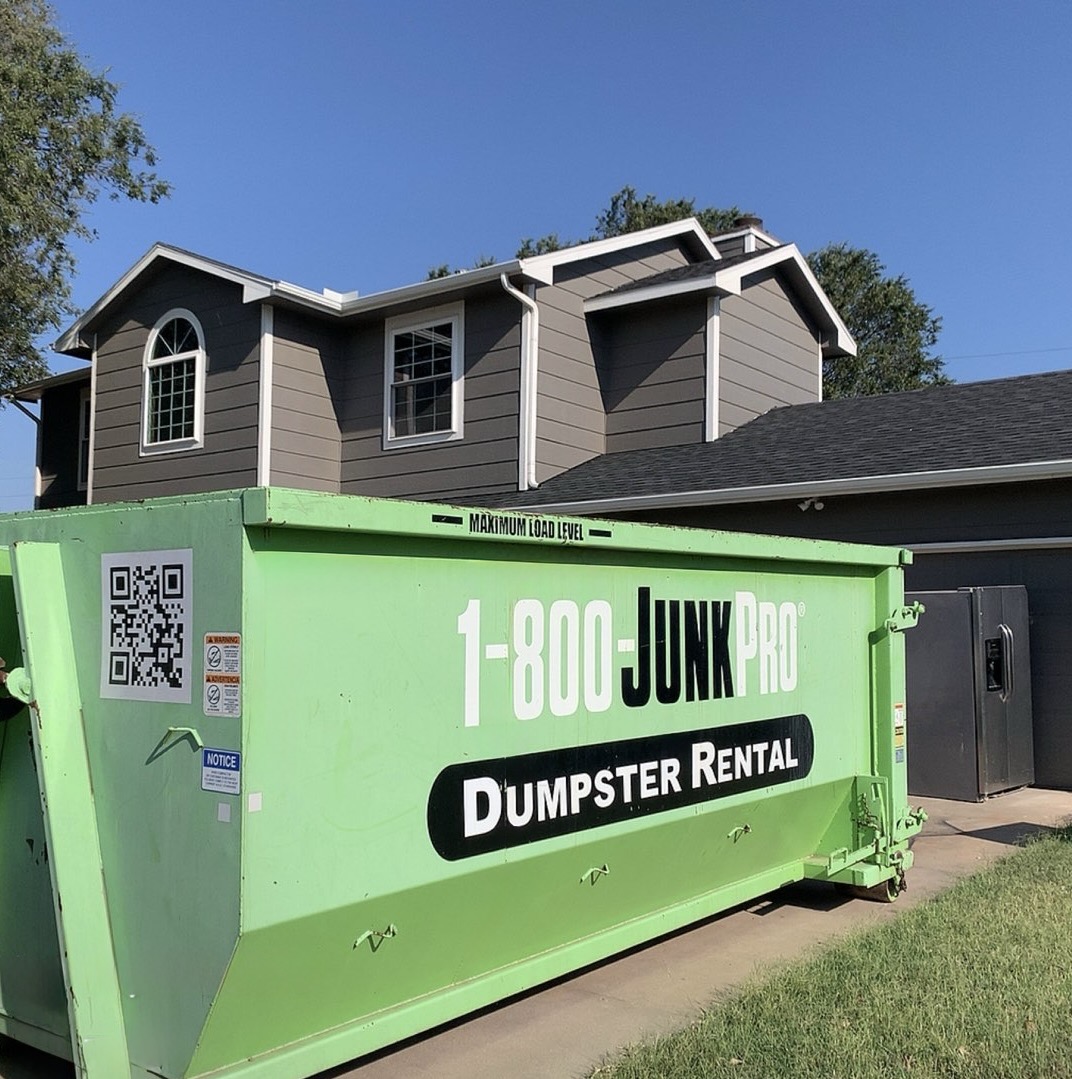
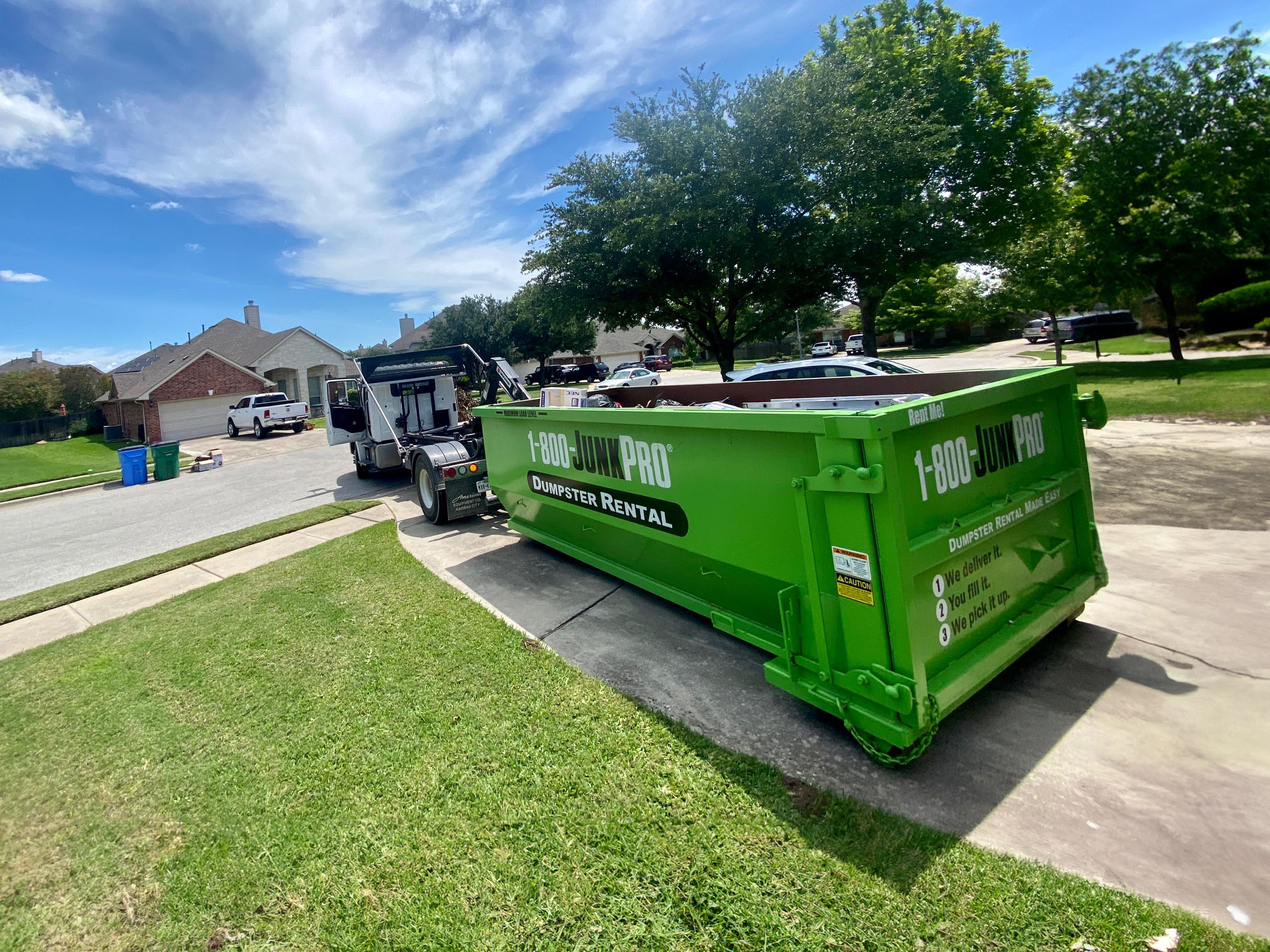
A residential dumpster creates one designated location for accepted project debris.
With 1-800-JUNKPRO®, we deliver the dumpster, you fill it during your project, and we pick it up when you’re finished.
That allows cleanup to happen as part of the renovation instead of waiting until the end.
From the Field: Renovation Cleanup
Home improvement projects around Austin can range from flooring and bathroom updates to larger remodeling and property-improvement projects. Regardless of the project, one thing matters once work starts: having somewhere for the debris to go.
Our 1-800-JUNKPRO® Austin team provides residential dumpster rentals that let homeowners keep an on-site container during the project, rather than repeatedly moving debris from one temporary pile to another.
The Austin team offers driveway-friendly dumpster options with full-swing rear doors, which make loading bulky renovation debris easier because customers can walk materials into the container rather than lifting everything over the side. Flexible rental periods also let the dumpster stay on-site as the project progresses.
For homeowners throughout Austin and surrounding communities such as Round Rock, Georgetown, Cedar Park, Pflugerville, Kyle, Buda, and San Marcos, this can make debris management part of the renovation plan from the start—not something to figure out after demolition begins.
Real projects also remind us that no single debris estimate fits every renovation. Two bathrooms of similar size can produce different amounts and types of debris depending on what you remove, what you uncover, and how much of the space you change.
Don’t Forget About Weight, Not Just Volume
A dumpster can look like it has plenty of room, but the material inside may already be getting heavy.
That’s especially important with dense renovation materials.
The amount of space debris occupies and how much it weighs are two different considerations. Certain materials may also have specific restrictions or require different handling depending on the dumpster provider and local disposal requirements.
If your project involves particularly heavy materials or something you’re unsure about, ask before loading.
It’s much easier to discuss the material before the project begins than after the dumpster is already full.
Keep Loading in Mind While You Work
How debris goes into the dumpster can affect how efficiently you use the available space.
Large, awkward pieces can create empty pockets. Long materials may take up more room than expected if they’re placed randomly. Putting everything in without thinking about how it fits can make a dumpster appear full before you’ve made the best use of the available space.
You don’t need to treat loading like a puzzle, but it helps to keep the entire project in mind.
Also pay attention to the dumpster’s fill requirements. Materials shouldn’t extend beyond the permitted fill level, and certain items may not be accepted.
If you’re unsure about something, check before putting it in the dumpster.
What If the Renovation Creates More Debris Than Expected?
It happens.
You may uncover additional materials. The scope of the project may grow. Something you originally planned to keep may end up being replaced.
If you realize your project is generating more debris than anticipated, address it before the container becomes overloaded.
Contact your local 1-800-JUNKPRO® and discuss what remains in the project and what options are available in your market.
The important part is recognizing the change while you still have room to adjust the cleanup plan.
What Renovation Projects Commonly Create Dumpster Debris?
Residential dumpsters can be useful for many home-improvement projects, including kitchen and bathroom remodeling, flooring replacement, basement renovations, deck or fence projects and other home updates.
Exactly what can be placed in the dumpster depends on the materials and local requirements.
Before loading unusual, especially heavy or potentially restricted materials, confirm that they’re accepted.
Make Cleanup Part of the Renovation Plan
A renovation plan usually includes materials, tools, labor, schedules, and budgets.
Debris deserves a place on that list too.
Think beyond what you’re tearing out on the first day. Consider what the entire project may generate, where accepted debris will go while you’re working, and how it will leave the property when the job is finished.
Planning for cleanup from the beginning can keep debris from becoming the last unfinished part of your renovation.
With residential dumpster rental from 1-800-JUNKPRO®, the process is simple:
We deliver it. You fill it. We pick it up.®